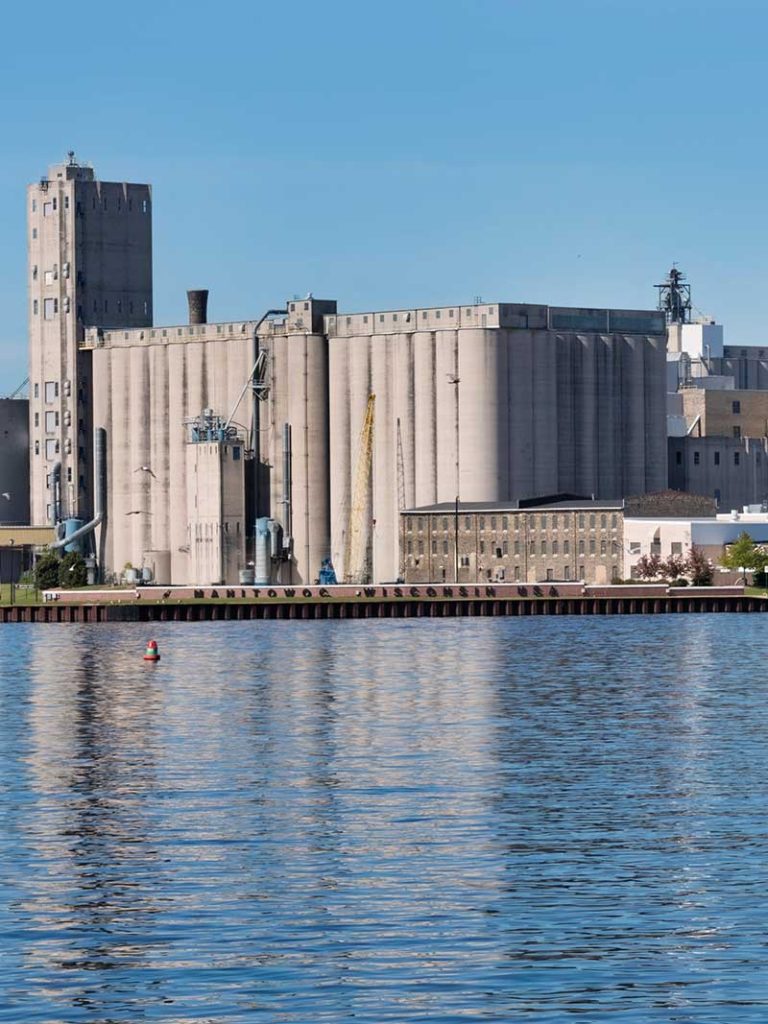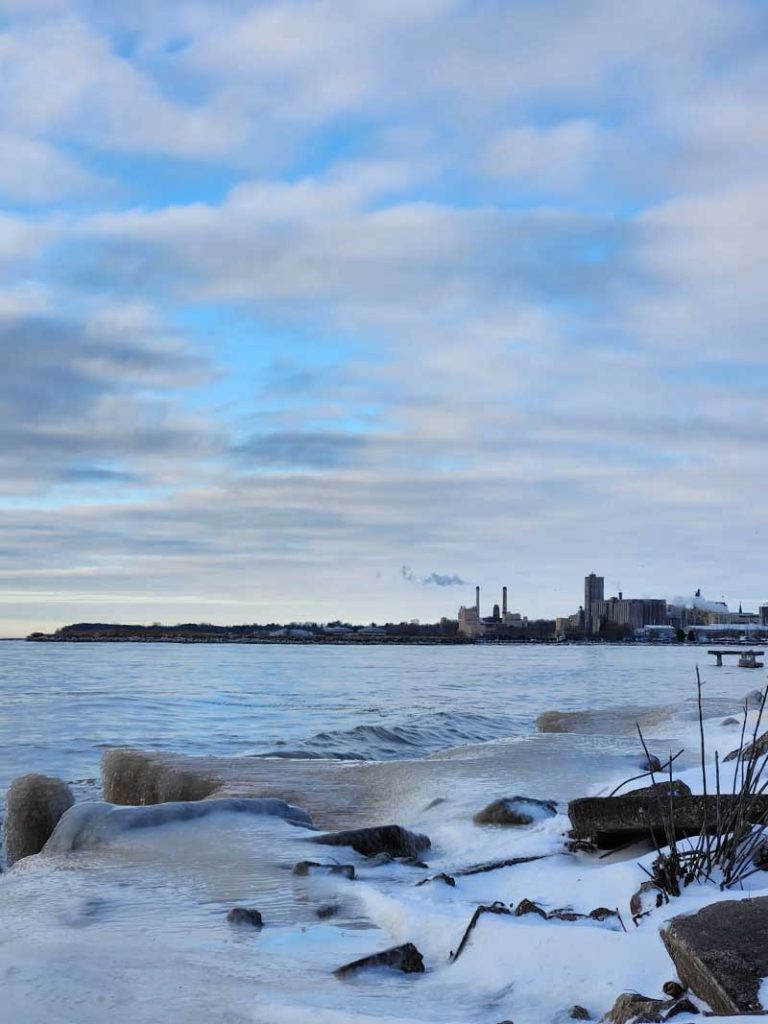
After an erratic and moody spring, it finally feels nice to walk around our Manitowoc malt campus without multiple wardrobe changes on any given day. Soon we will be into the high heat of summer, and porch sayings like, “On a quiet night, you can hear the corn grow” will make an appearance again. I want to lobby a new one for the catalogue of adages: “On any night, you can hear the malt grow!” You see, due to the multi-day batch process of malting, our malthouses run 24/7/365, and that means maltsters need to make malt during all seasons.
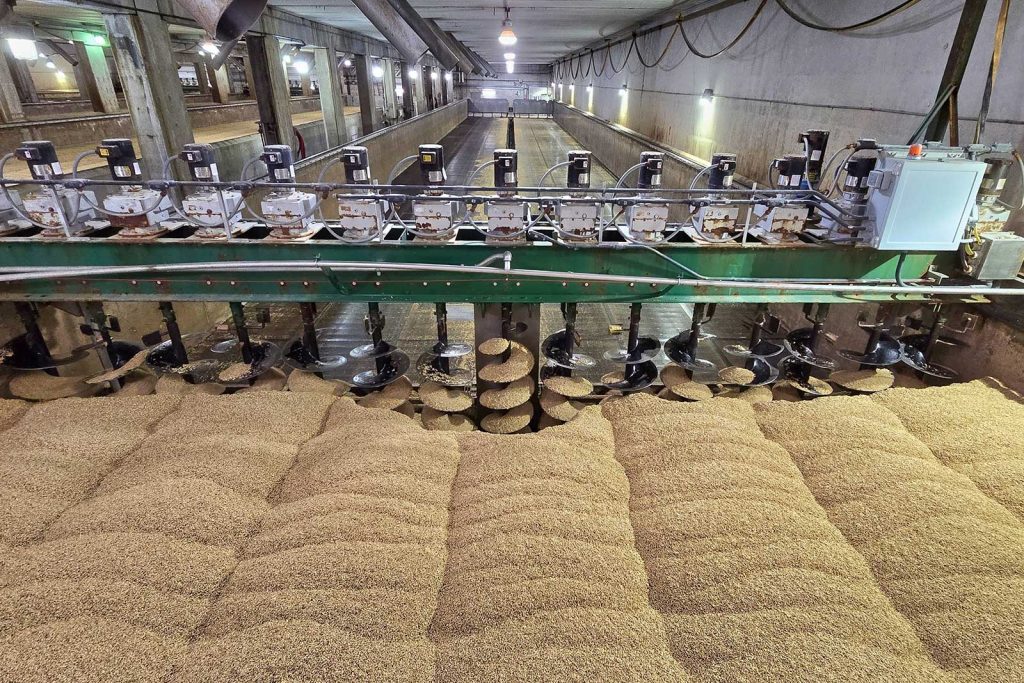
At the basics, a malthouse is a climate-controlled box that controls temperature and humidity across time. Changes must take place inside the malthouse to account for the changes happening outside. At each step of malting, temperature and moisture both inside and outside the kernel are at play.
STEEPING
Steep water is always tempered to specific malt styles, immersion timing, and air rests are adjusted based on how fast the malt is hydrating and chitting (the first visual signs of growth). Too cold steep water will lead to delayed growth; too warm and uneven water uptake can be a result. Proper steeping temperature and timing are essential for the success of the malt.
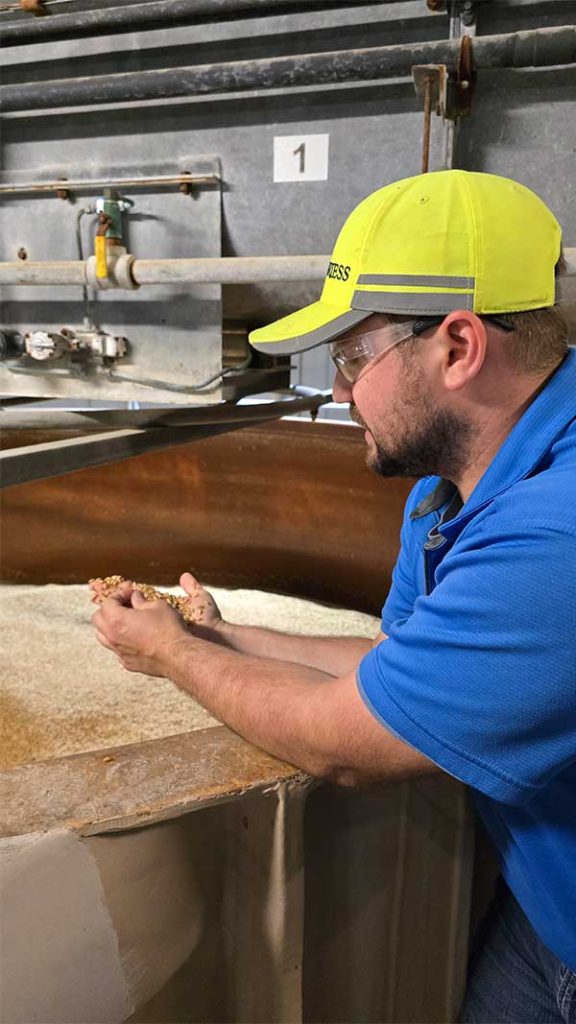

GERMINATION
Just like Goldilocks was searching for the bed that was “just right,” the maltster is always looking for our germination beds to be just right with consistent internal temperatures and adequate moisture to promote growth. A few degrees can make a big difference in the final malt analysis. A bed too cold will lead to reduced growth, which may impact enzyme levels, reduce breakdown of starches and proteins, as well as increased levels of beta-glucan. A bed that is too warm can lead to a reduction in extract due to overgrowth and, at the extreme, kernel death and subsequent souring of the bed.
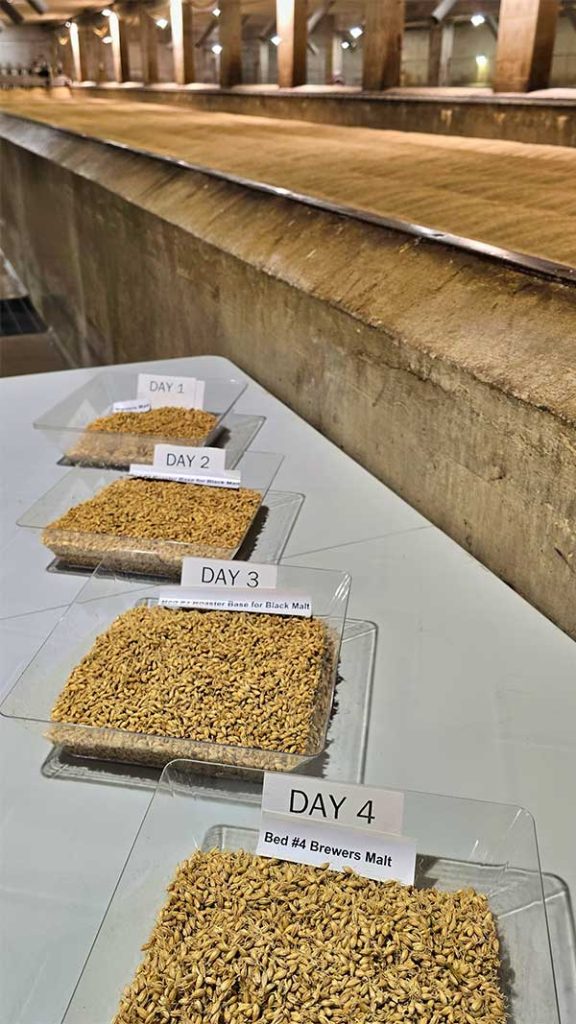

Inside the Briess germination room, all incoming air is tempered and humidified as it passes through “the Sprays,” an air chamber where water is emitted continuously. The hydrated air keeps the malt from drying out while it grows. A large volume of heat is generated throughout the growth process of malt, and dampers below each bed moderate air flow that passes through the grain. The dampers are continuously changing to maintain the setpoints for each batch and the specific malt style they are destined to be.
KILN
As the green malt travels to the kiln, dew point, relative humidity, and water holding capacity are factors that are considered at each length of kilning steps. When dew points are high, there is already more moisture in the air, affecting the efficiency of drying. The Briess kilns have the capability to both “exhaust” or “recycle” kiln air, depending on the step of the recipe or the style of malt, if we need more or less moisture in the air.

Scheduling and planning production of specific products during certain times of the year is another tool in the maltster’s toolbox. From the humid heat of summer, it is advantageous to produce hi-dried specialty malts such as our Bonlander® and Aromatic Munich Malts, or American Honey Malt, as the added moisture in the air helps promote color formation as well as the Maillard reactions to create their characteristic flavors. On the flip side, the dry air of winter promotes more efficient drying at low heat to keep our lighter base malts, such as our Pilsen Malt, light in color and flavor.

While the weather outside can provide challenges for both barley out in the field and inside the malthouse, the tools are there to provide a malt for all seasons.
While production demands throughout the year don’t always allow for scheduling of specific styles of malt during specific seasons, it’s the maltsters job to use the tools at our disposal to create a consistent high-quality malt at any time of the year. Through daily quality checks, recipe adjustments, and standard production practices, Briess’s number one priority is to deliver malt that is a consistent color, modification, and overall performance, regardless of the day it was made.